Thursday, August 26, 2010

Canadian Rockies Trip: Day 5(Icefields Parkway from Banff to Jasper)

Tuesday: July 27th

Today's program was to drive the Icefields Parkway to Jasper national
park and camp there for the next two days.  The morning was cloudy and
I did not get up for sunrise.  The Icefields parkway which stretches
between Lake Louise and Jasper Townsite for 200km is a continuous
visual treat.  The Canadian parks boast of it as the most scenic
highway in the world.
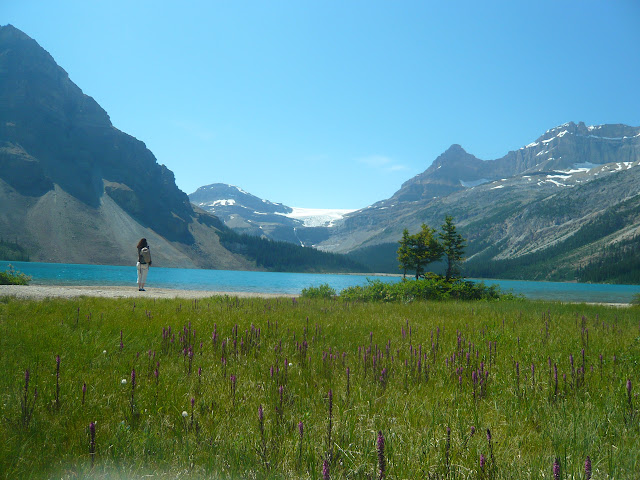
Bow Lake and Bow Glacier
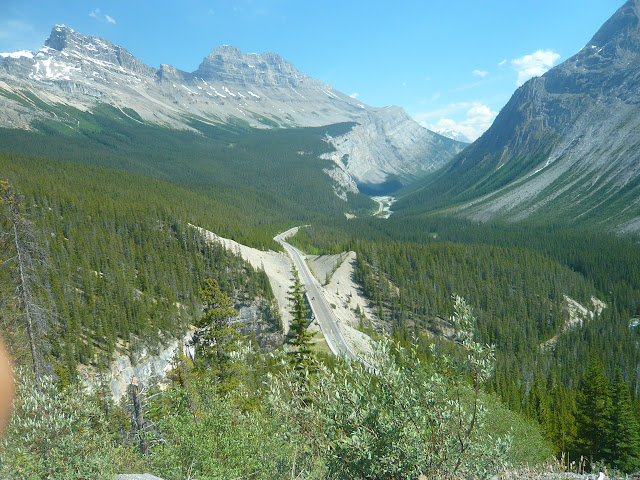
Icefield Parkway Near Sunwapta Pass

Crowfoot Glacier and Bow Lake: Crowfoot glacier is the first glacier
which can be seen close-up from the highway and hence attracts hoards
of tourists.  Bow lake is the origin of the Bow river and it sits at
the foot of the Bow glacier.  A pretty lodge called Num-Ti-Jah is
located right on the shore.
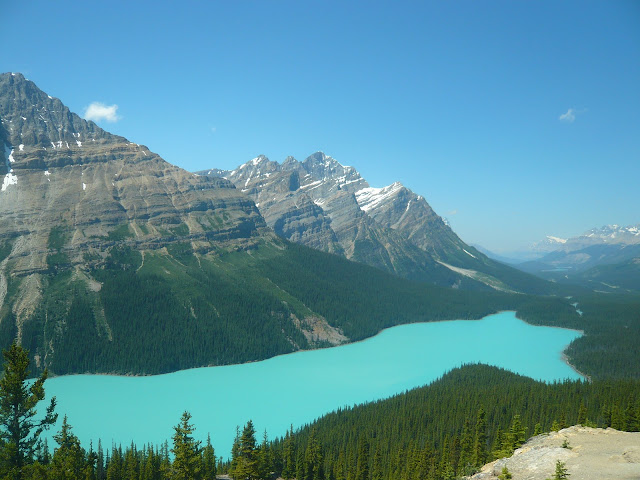
Peyto Lake
Peyto Lake: Along with Moraine lake this is the iconic lake of the
Canadian Rockies.  In midday sun, it looks a gorgeous shade of opaque
green and as a bonus its shape reminds one of a bear's head.  A 10 min
trail leads to the viewpoint from the parking lot.  The viewpoint was
naturally crowded with tourists and everybody had to take turns in
taking pictures.
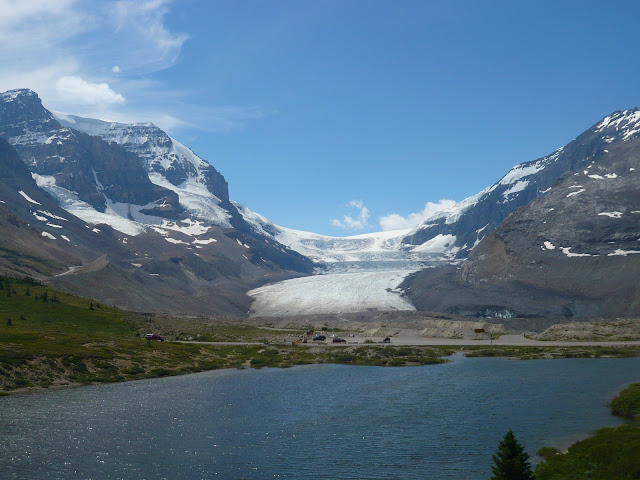
Athabasca Glacier
Columbia Icefield and Athabasca Glacier: The Icefields parkway goes
over Sunwapta pass and enters Jasper national park.  Soon the
Athabasca glacier comes into view whose toe lies very close to the
road.  A short trail takes one to within a stone's throw of the
glacier.  For safety reasons, the park service prohibits one from
going onto the glacier unless one is with a guided tour.
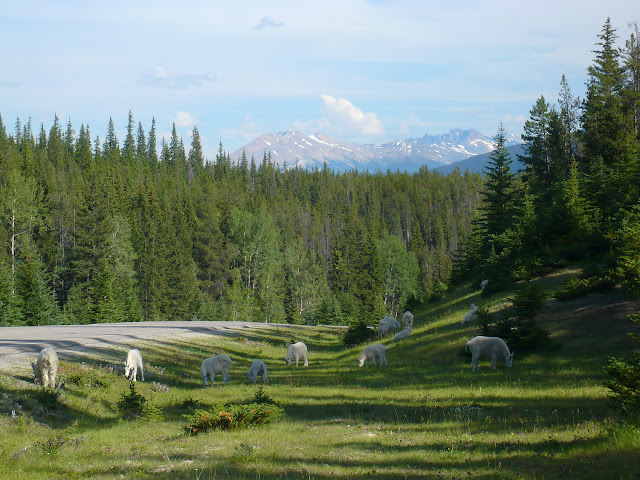
Mountain Goats
Goats and Glaciers: The viewpoint is noted for having a salt lick on
it and hence is frequented by herds of mountain goats to get salt.
Hence goats and glaciers.
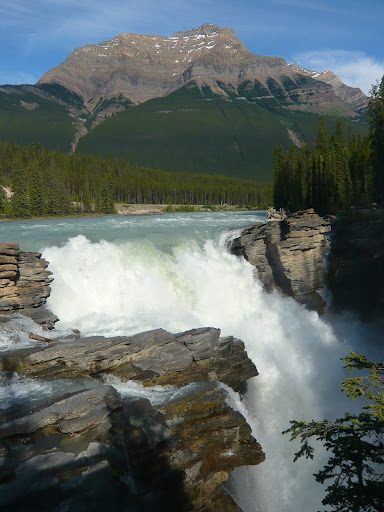
Athabasca Falls
Athabasca Falls: The Athabasca river starts from the Athabasca glacier
and follows the road to Jasper.  The Athabasca falls are not very
high, but the key attraction here is the volume of water on the falls.

Once we reached Jasper, we checked into Wapiti campground.   With 364 sites, the Wapiti is a "smaller" campground compared to its neighbor Whistlers which has 781 sites.   The Parks Canada campgrounds are positively luxurious with hot showers and poer outlets to charge your cell phone/digital camera.  Only downside is their cost and the fact that even to start a fire, you have to pay extra.   Our campsite was a nice site right next to that Athabasca river.   We cooked dinner and went to sleep early.

Chiranjeeb

Canadian Rockies Trip: Day 4 (Lake O'Hara at Yoho NP)

Monday: July 26th

We woke up at 4AM and headed out at 5AM to Lake O'Hara parking
lot in Yoho National Park.  Lake O'Hara is the most coveted day hiking
destination in the Canadian rockies and they have a quota of 42 day
hikers per day allowed into the area where they are bused in from the
parking lot on an 11km dirt road to Lake O'Hara itself.  The 42 places
on the bus can be reserved 3 months in advance and they typically sell
out within an hour of becoming available.  So our only hope was that
there would be some cancellations on the day we show up and we can
grab those cancelled spots as standby hikers.  We got to the parking
lot at 6AM for the 8:30AM bus.  Thankfully, there were enough
cancellations and we were lucky to get on the bus.  On the lake shore
we decided to take the Opabin Plateau loop and started the hike around
9AM.  Highlights of Lake O'Hara:
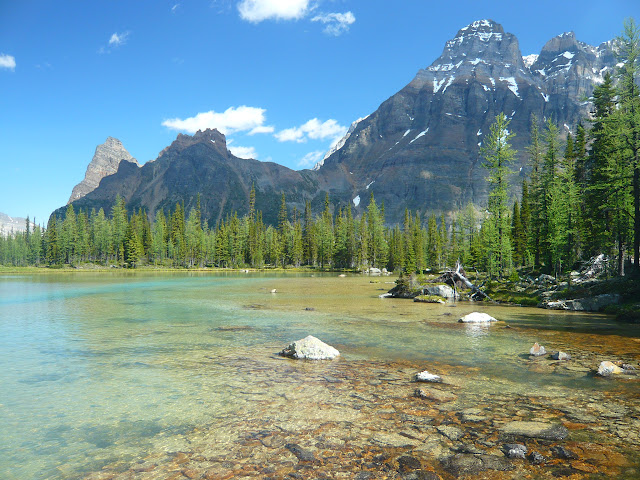
Tarn on Opabin Plateau
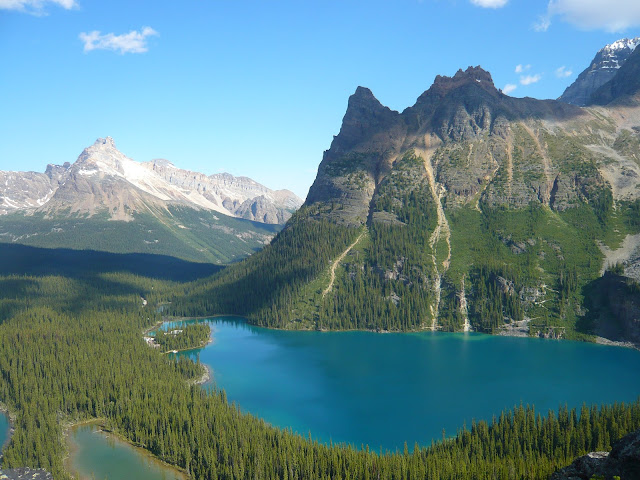
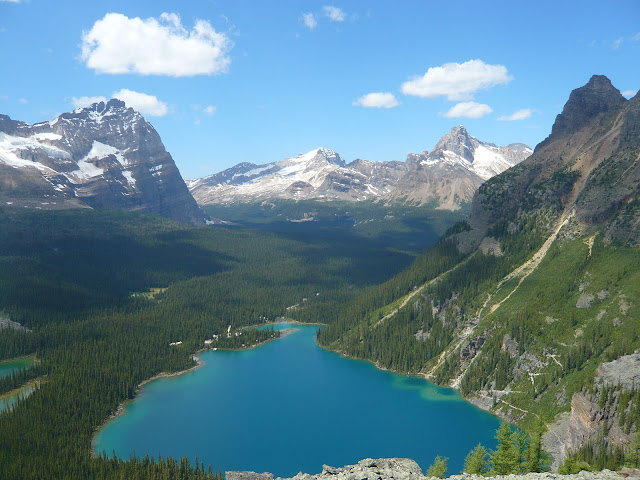
View from Opabin Prospect

Opabin Plateau: Beautiful view from Opabin prospect down to Lake O'Hara and
Lake Mary.  The plateau is dotted with a bunch of small lakes and streams
around which you can wander.  There are a lot of Larch trees which turn beautiful yellow in fall.
Opabin Lake
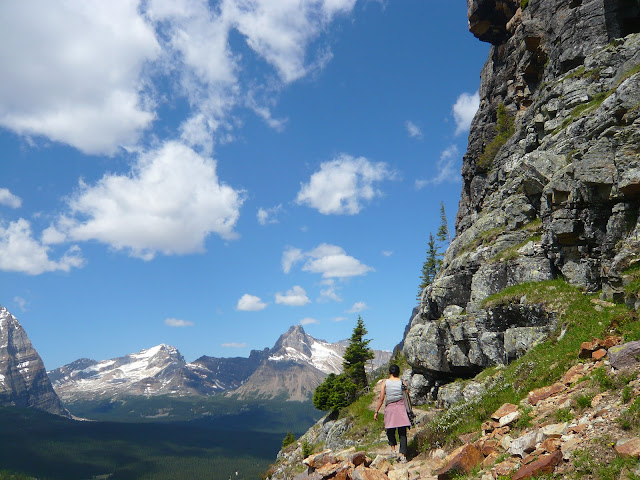
Yukness Ledges Trail


Yukness Ledges: This trail connects Opabin plateau to lake Oesa.  It
is a very narrow trail which precariously hugs the side of a cliff
most of the time and requires some judicious route finding.  Not
something for poeple with a fear of heights.
View from Yukness Ledges Trail
 
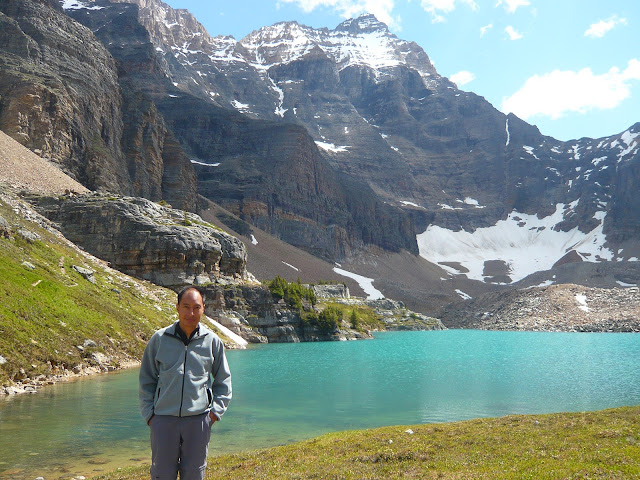
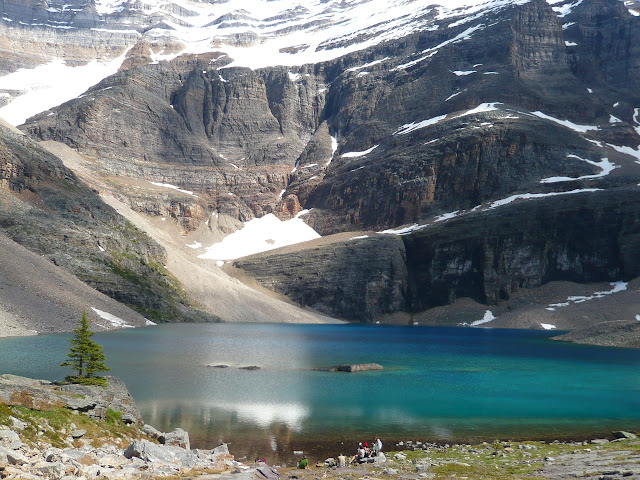
Lake Oesa
From the trail you get
continuous views of Lake O'Hara and its surrounding peaks.  Every
single step of this trail has a beautiful view.

Lake Oesa: Lake Oesa is a large deep blue lake set in a glacial cirque
surrounded with cliffs.  Water out of the lake cascades through a
series of waterfalls and more smaller lakes to finally end up on Lake
O'Hara.  The trail from Lake Oesa down to Lake O'Hara is very steep
and would not be easy if we tried to come up it.

We came down the lake Oesa trail and took the 4:30PM bus out.  Lake
O'Hara is the most beautiful place we have seen and was the highlight
of our trip.  This place has hikes to suit every level of fitness and
all of them are equally beautiful.  We would wholeheartedly recomend
anybody going there to make an attempt to visit the place.  I took a
lot of pictures here: every turn in the trail brings someting more
interesting to see and seem to deserve a picture of its own.

Chiranjeeb

Canadian Rockies Trip: Day 3 (Banff and Lake Louise)

Sunday: July 25th

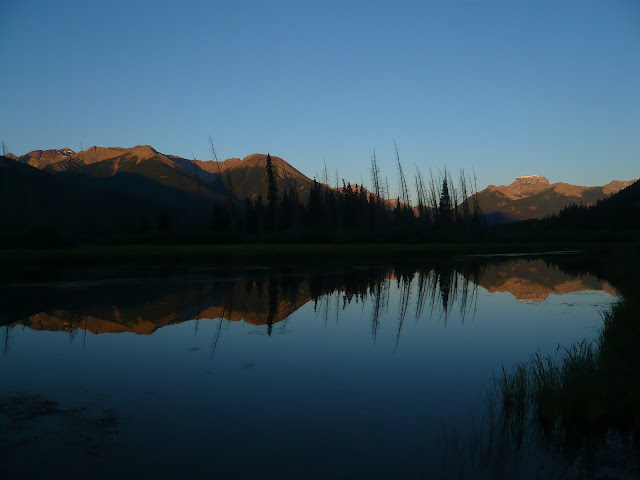
First Vermilion Lake at Sunrise
I woke up before sunrise to go and photograph morning light on
Mt Rundle from the Vermilion lakes just outside Banff townsite.

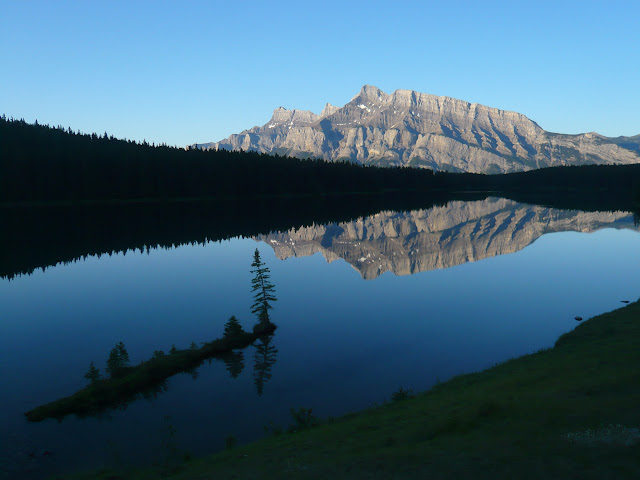
Mount Rundle Reflected on Two Jack Lake

Unfortunately, the morning light was not very good on Mt Rundle, and I
got some more interesting pictures at Two Jack Lake instead.

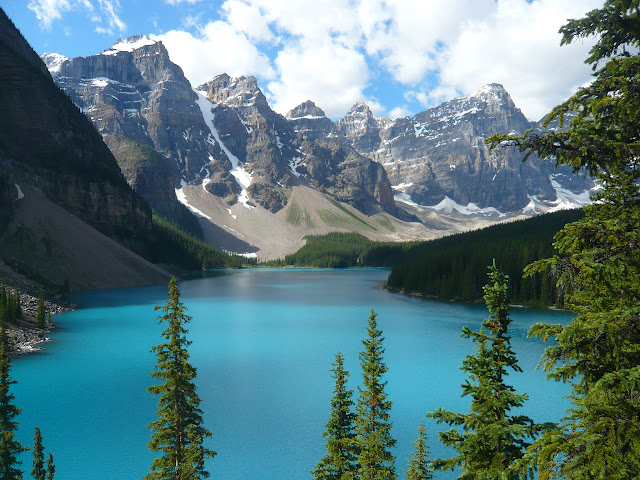
Moraine Lake
Moraine Lake: We started our day by driving into Moraine Lake.  It is
one of the most beautiful lakes in the Rockies with intense blue water
and beautiful valley of the Ten Peaks rising behind it.  There were
beautiful red canoes paddling on the lake which added more contrast to
the scene.  After the lake, we decided to take a hike to Larch Valley.
All the hikes around Moraine Lake required hikers to travel in groups
of four to protec against grizzly bears.  We fell in with a couple and
started, but the thin air at this high altitude (6000+ ft) and
steepness of the trail stopped us after a bit.  We decided to drive to
lake Louise instead.

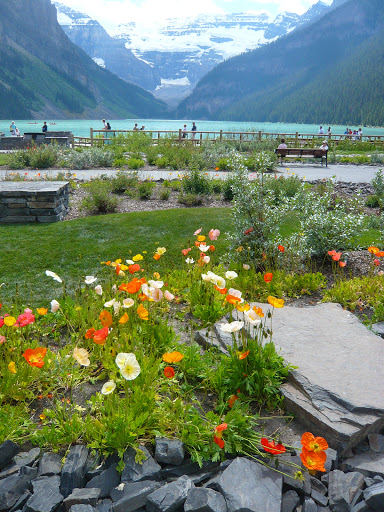
Lake Louise
Lake Louise: A very crowded lake with bus load of tourists and a
beautiful hotel right next to it.  There was a wedding going on at the
hotel at the lake shore.

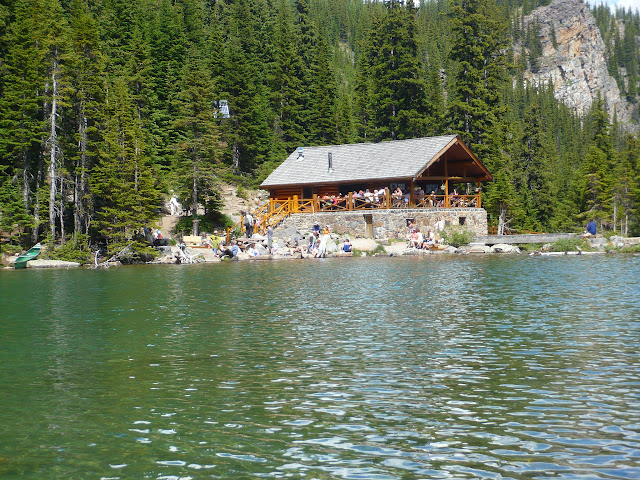
lake Agnes

We started on the lake Agnes trail (6.8 km
round trip, 285 m gain) and were at the lake in an hour.  The lake is
set in a cirque surrounded by snow covered peaks and in the midst of
it all, there is a tea house serving many kinds of exotic tea.  The
tea house is clearly very popular with the hikers as well as the horse
back riders.  We had our lunch on the lake shore, turned back and were
back at the trail head soon.  From the trail, the intermittent view of
Lake Louise was awesome.


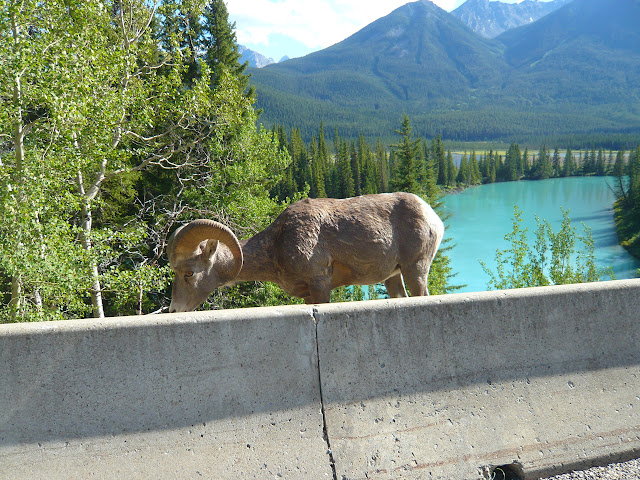
Big Horn Sheep on Bow Valley Parkway
Bow Valley Parkway: Instead of taking the Hwy 1 back to our hotel, we
drove on Bow valley parkway which parallels Hwy 1 between Lake Louise
and Banff townsite.  There are many viewpoints on the parkway, but the
most interesting thing we saw were a herd of bighorn sheep which were
grazing by the road.

Chiranjeeb

Canadian Rockies Trip: Day 2 (Kootenay NP and Banff)

Saturday: July 24th

The day's plan was to drive to Kootenay national park and then enter Banff and finally
by evening reach our hotel at Canmore.  After free breakfast at Super 8
we started out around 8:30.  Within an hour we crossed the border with
minimum delay.  After that it was a long drive to our next
destination: Radium Hot Springs, BC which is the gateway town to
Kootenay National Park.  On the way, the scenery was becoming more and
more promising with the beautiful Kootenay river and Columbia lake
(origin of the Columnbia river) surrounded by steep mountains.  The
lake and the river were tinged green with glacial flour.  At Radium,
we stopped at the National Park visitor center and picked up
brochures/maps for the park.  We bought our year long Candian national
park pass at the park gate for $136 which was quite steep compared to
the US park pass ($80).  This was going to be a recurrent pattern
everywhere: the Candian park system appears to be significantly more
costly than the American system.  However, the Canadian parks have
more winter facilities than the American ones.

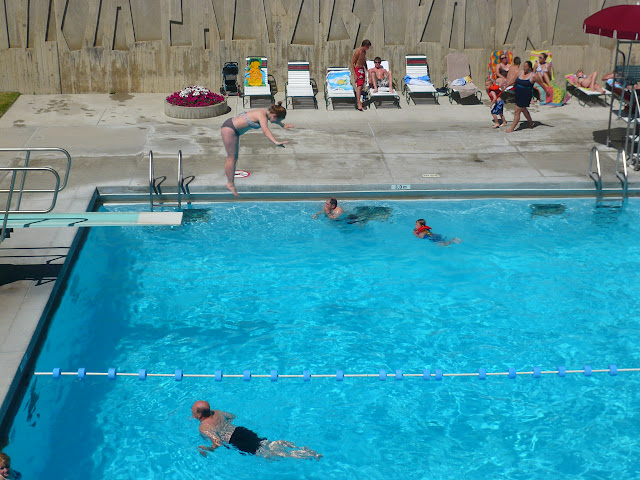
Radium Hot Springs
Radium Hot Springs: The hot springs at Kootenay are the key
attraction for the park, but they did not look much different from a
regular swimming pool.  The hot water is piped from the springs to a
pool where you can go in.  Lot of people frolicking in the pool, but
since we did not have any swim suits, we did not go into the water.


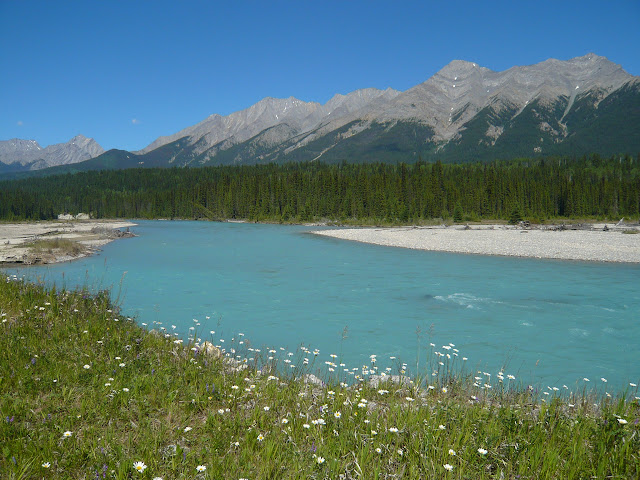
Kootenay River
Kootenay River: The main road (Route 93) runs through the Kootenay
valley along the river.  It is fed by glaciers which brings in finely
ground rock powder in the water.  The suspended rock flour gives the
water a beautiful opaque green hue which is intensfied under mid day
sunlight.  Most of the lakes and rivers in the Canadian rockies have
this beautful color.  The valley was idyllic with beautiful mountains,
greeen trees and daisies blooming by the river.


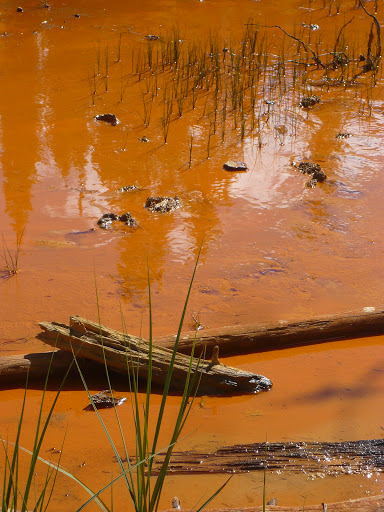
Paint Pots
Paint Pots: The paint pots are actually pools where iron-rich
underground springs come out of the ground and stain the soil with
deep orange and ochre colors.  It appears that the soil was used by
Indian tribes for body paint and were used by the white men for ochre
pigments.  To us, the soil looked very much like any red soil from
Assam (especially the red soil around Jorabat) and we were not
particularly impressed.  Nandana labelled the pools as "gela pukhuri".


Marble Canyon

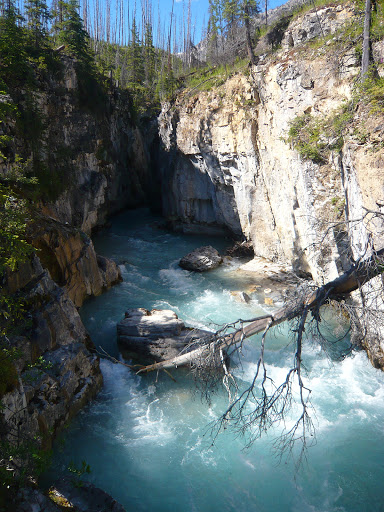
Marble Canyon: This is a beautiful slot canyon carved by the
Tokumn creek from white dolomitic rock.  The trail crosses the
stream repeatedly and gives a good view into the canyon which is
approximately 150 feet deep at points and only 10 feet wide.  The
river enters the canyon with a deep and powerful waterfall.  In the
coming days, we saw other examples of this kind of canyons.  Mt
Rainier also has a slot canyon like this, but not as beautiful or
deep.  The southwest (Arizona and Utah) also has slot canyons, but
those are mostly dry most of the year.


Vermilion Pass and Continental Divide
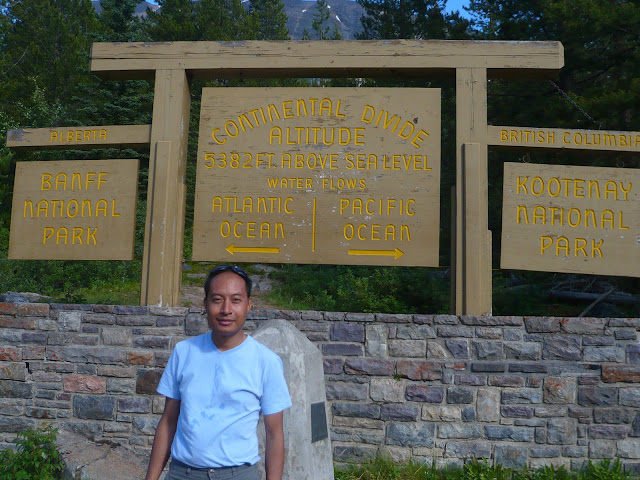
Continental Divide: The road crosses over from Kootenay to Banff
national parks over Vermilion pass.  This pass divides Kootenay from
Banff, British Columbia from Alberta and finally the Pacific watershed
from the Atlantic watershed.  Water from the east side of the pass
flows into Atlantic ocean while the water on the west side flows into
the Pacific ocean.  The contnental divide is the demarcation line
between these two watersheds and runs along the spine of the Rocky
mountains.


Castle Mountain and Bow River
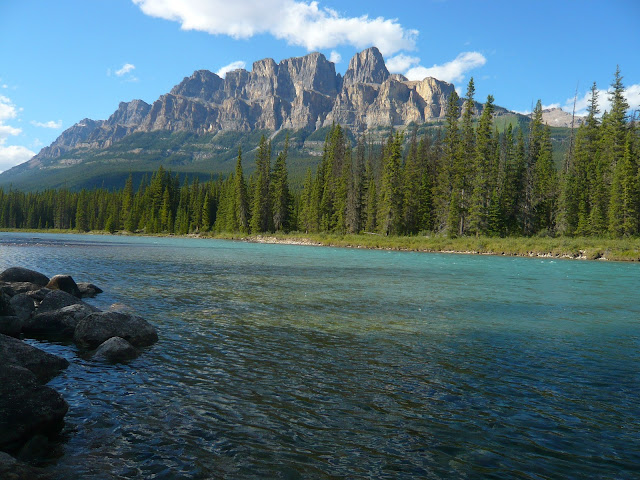
We drove into Banff, took a few pictures in the Castle Junction and
drove into Canmore for our hotel (Grande Rockies Resort).  It was a
very good deal for the money: a one bedroom suite with full kitchen
(granite counter tops!), two flat screen TVs and a shower which is
more complicated than Windows 7.

Chiranjeeb

Canadian Rockies Trip: Day 1

This is a belated trip report of our trip to the Canadian Rockies.

Friday: July 23rd

We started out of Seattle at exactly 4PM.  The plan was to take I-90
to Coeur d'Alene and then turn north to Canada border via Bonners
Ferry.  I got out of work a little bit early while Nandana packed the
car.  The traffic was light out of Seattle and we made good time until
Issaquah.  That's when we realized that we forgot our USB cable for
the digital camera: a frantic search on iPhone revealed that the
closest Radio Shack was on the next exit.  Radio Shack did not have
the right cable, but instead we got a 4GB SD card which should hold
the photos we were likely to shoot.  It was smooth sailing after that
and we did not stop until Spokane to get gas.  Saranga and Gitashree
were also en route to Yellowstone and we had hourly update from them
on their progress.  They were about 30 mins ahead of us on the way and
we parted ways at Coeur d'Alene where they continued on I-90 to
Missoula, MT.  We had not booked any motel on the way for that night.
Searching for hotels on the GPS and calling them finally yielded a
Super 8 at Ponderay, ID.  We would have preferred to go further, but
there was nothing available in Bonners Ferry and the next significant
town inside Canada was too far away.

Chiranjeeb

Sunday, August 15, 2010

Hiking the Railroad Grade Trail

Today was a beautiful day in Seattle. Our plan for the day was to hike the Railroad grade trail, which falls in the Mt. Baker recreational area.  This is one of the most popular hikes in the area. It's almost 7 miles round trip and elevation gain is slightly more than 2000 feet. We had few tasks to finish before we start , so by the time we hit I-5 north it was already 10.30 a.m.

Everybody was out on the road already, but thankfully there was no major delay and at about 1 pm we reached the trailhead and as expected the parking lot was already full. We managed to get a spot and took out things we would require (basically a lot of water) during the hike and started at 1.15 p.m. The initial quarter mile is an easy walk through the Schreibers meadow.  After that the trail becomes rockier and at .9 mile you reach a bouldery creek. after crossing the creek on a wood log bridge, we entered the forest and the trail now becomes quite steep with lot of switchbacks.

Creek crossing

This part is tiring but once you are done with it , you reach the beautiful Morovitz meadow. With all the wild flowers and the view of mountains (Mt. Baker looks so near from there), I immediately forgot my struggle to climb  up to that point.
Morovitz Meadow with Mt Baker in the background

By the end of the meadow (2.3 miles), the trail forks. The left one goes to Park Butte and the right one to Railroad grade.  The Railroad Grade itself is actually a ridge or lateral moraine left by the Easton Glacier which leads up from the Morovitz meadows all the way to the Easton glacier itself.   The trail follows the crest of the moraine with steep dropoffs on both sides.  This trail is used by climbers to approach the Easton glacier route on Mt Baker.

Tarn near Mt Baker.   The green ridge rising to the left is the Railroad Grade.   The uniformity of its slope apparently gave it the name of Railroad Grade.

From the fork we climbed up the stone plank steps and passed a few pretty campsites. Till then it was of course pretty, but the best part comes after this.  The trail on the top of the moraine was extremely narrow (two persons can not pass each other on it, one has to wait at a safe postion ) and you could look a long way down to  roaring rocky creek running from the glacier.
Railroad Grade trail with Easton glacier below.
Looking forward at the trail.

The view was awesome in all directions with Mt Baker and Easton glacier on one side, and beautiful Morovitz meadows and Park Butte on the other side.
Purple Alpine Heather on the trail.

Along the moraine we hiked up about a mile a reached the high camps used by climbers. We found a nice campisite to take a break and had our lunch. From the campsite , you can not only see the Mt. Baker and the glacier but also distant North cascade peaks, including Glacier peak.

High Camp: Our turnaround point.

After lunch at around 4 p.m we started down. The return trip was quick and soon we were back in the Schreibers meadow. There were blueberry shrubs on both sides of the trail, which we had noticed while going up. This time we stopped to 'graze' on the wild blueberries. And many other hikers followed us!

Blueberries.

we were back at the car by 5:45 pm. It was overall a very beautiful hike, though a bit strenuous for me . It was a hot sunny day and we had to drink a lot of water. But now I know why it is ranked as one of the premier hikes of Washington.

Nandana

Tuesday, August 10, 2010

California trip: a few observations

While Chiranjeeb has taken up the responsibility of writing the day to day account of the trip (which I hope he will finish writing ..some day !) I just thought of sharing a few random observations from the trip.


1. Road trip is a good experience. When you fly, You are lifted from one place and dropped in another. But the gradual change climate, terrain etc can be experienced only on a road trip.


2. San Francisco is a place which I found totally flooded with tourists. In all other places you do see tourists, but there will be local people around too. But somehow in San Francisco I saw only tourists, with maps & guidebooks in their hands. As if local people have given up their city to the tourists, and decided to lock themselves up inside their houses. Well, this observation may be due to the fact that I stayed in downtown San Francisco, but I found it really striking about this city.


3. The pier 39 in San Francisco is pure hype. If you stay in the city , you can go there and hang out if you want. But for a tourists they don’t really offer anything…just shops. Those Sea
lions are interesting..but the place stinks so much, you can’t think of spending more than few minutes there ! :)


4. Lombard street is fun. But I really wonder how the people living at that neighborhood manage..with all the tourists 24/7 !


5. UC Berkeley surprised me a bit. I was expecting a more traditional looking campus. But the most interesting thing I heard about UCB is that, it seems a they have few parking spots reserved for Nobel Laureates !! I really wanted check it out..but we were pressed for time. Anyway, next time will try to find that out, and in case I spot any car parked there..will definitely hang around !:)


6. Golden gate bridge is best thing San Francisco has to offer. But with all the fog, you have to be really lucky to get a full view of the bridge…particularly during summer. Bdw, You get the best view from the Marin county.


7. Stanford campus is pretty impressive, with all the Palm drive and all.

8. Santa Barbara is the place, I liked the most. It’s small cute town with everything built in Spanish style. It’s a place where all the rich people of California retire, and you come across that laid back atmosphere everywhere…people sitting leisurely in a roadside coffee shop,sipping coffee & chatting. Other than the beautiful beaches, the town offers nothing very touristy thing to do and that’s the best thing about it. This is a place where I
would love to go back again for a relaxed vacation.


9. Other than all the BTDTs in L.A, I think one very interesting place one should visit is the Getty Center. (It has no entrance fee, but has a parking fee for $ 15). The place is extremely well maintained. For those who are interested in Art , sculpture, Photography etc, the center has lot to offer. All you need is time..you can’t rush through them.


10. Oh bdw,if you go to L.A, try to stay at Westin.. I mean that’s where you might get it at an affordable price, like we did. They claim to have the best beds among all the luxury hotels which they call ‘Heavenly beds’, and they are indeed heavenly! :)


11. It seems I experienced one of the rarest things in Yosemite..rain !! and it was a real bummer. After camping there for the night, we had to abandon our plans for hikes and climbs for the next day and get out of he park as soon as possible. Yosemite otherwise is nice national park, you can see lot of stuff ..mountain, lakes , beautiful meadows within a short distance. I think that makes the park so popular.

Nandana