The day's plan was to drive to Kootenay national park and then enter Banff and finally
by evening reach our hotel at Canmore. After free breakfast at Super 8
we started out around 8:30. Within an hour we crossed the border with
minimum delay. After that it was a long drive to our next
destination: Radium Hot Springs, BC which is the gateway town to
Kootenay National Park. On the way, the scenery was becoming more and
more promising with the beautiful Kootenay river and Columbia lake
(origin of the Columnbia river) surrounded by steep mountains. The
lake and the river were tinged green with glacial flour. At Radium,
we stopped at the National Park visitor center and picked up
brochures/maps for the park. We bought our year long Candian national
park pass at the park gate for $136 which was quite steep compared to
the US park pass ($80). This was going to be a recurrent pattern
everywhere: the Candian park system appears to be significantly more
costly than the American system. However, the Canadian parks have
more winter facilities than the American ones.
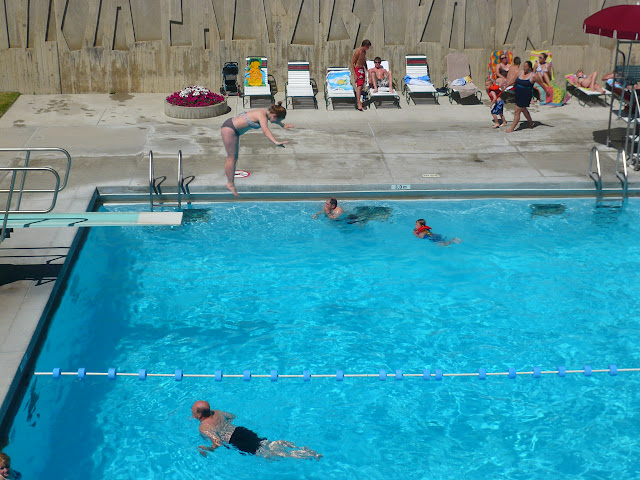 |
| Radium Hot Springs |
attraction for the park, but they did not look much different from a
regular swimming pool. The hot water is piped from the springs to a
pool where you can go in. Lot of people frolicking in the pool, but
since we did not have any swim suits, we did not go into the water.
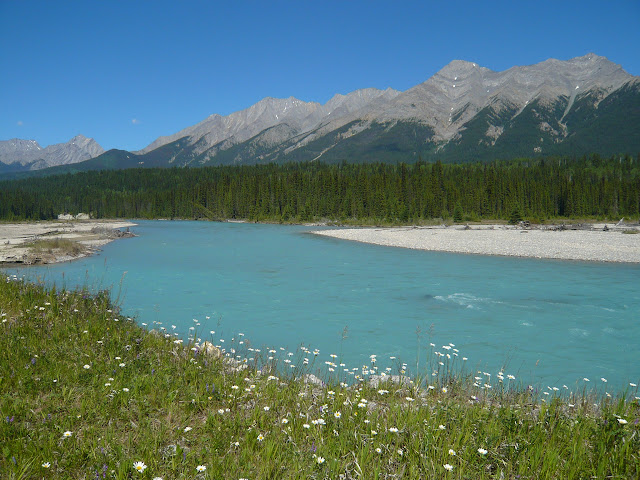 |
| Kootenay River |
valley along the river. It is fed by glaciers which brings in finely
ground rock powder in the water. The suspended rock flour gives the
water a beautiful opaque green hue which is intensfied under mid day
sunlight. Most of the lakes and rivers in the Canadian rockies have
this beautful color. The valley was idyllic with beautiful mountains,
greeen trees and daisies blooming by the river.
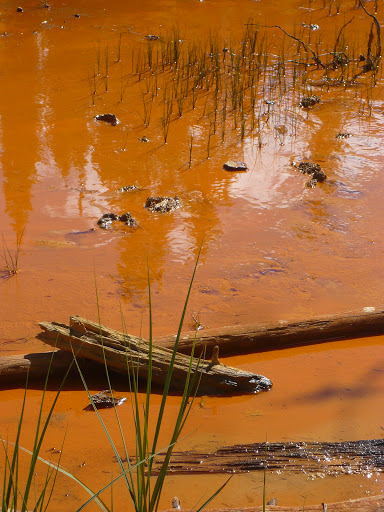 |
| Paint Pots |
underground springs come out of the ground and stain the soil with
deep orange and ochre colors. It appears that the soil was used by
Indian tribes for body paint and were used by the white men for ochre
pigments. To us, the soil looked very much like any red soil from
Assam (especially the red soil around Jorabat) and we were not
particularly impressed. Nandana labelled the pools as "gela pukhuri".
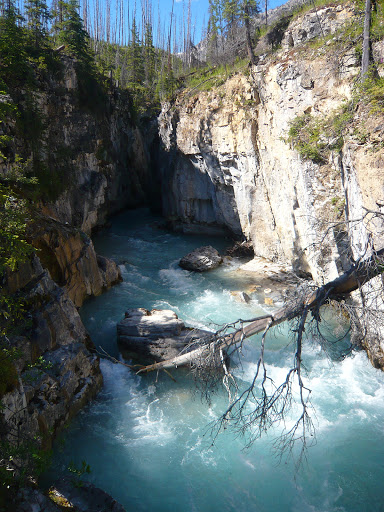 |
| Marble Canyon |
Marble Canyon: This is a beautiful slot canyon carved by the
Tokumn creek from white dolomitic rock. The trail crosses the
stream repeatedly and gives a good view into the canyon which is
approximately 150 feet deep at points and only 10 feet wide. The
river enters the canyon with a deep and powerful waterfall. In the
coming days, we saw other examples of this kind of canyons. Mt
Rainier also has a slot canyon like this, but not as beautiful or
deep. The southwest (Arizona and Utah) also has slot canyons, but
those are mostly dry most of the year.
 |
| Vermilion Pass and Continental Divide |
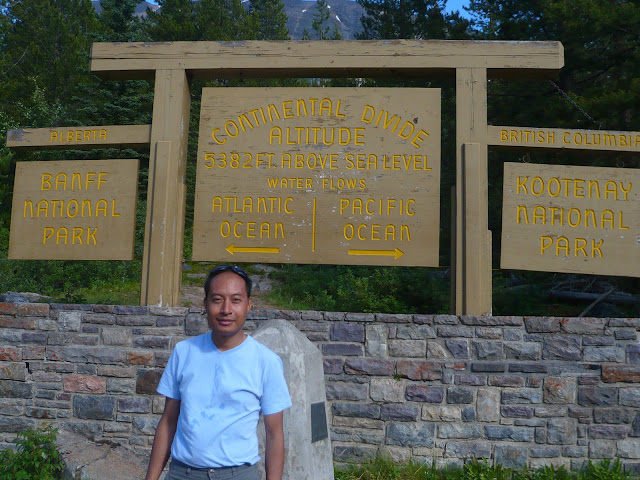
national parks over Vermilion pass. This pass divides Kootenay from
Banff, British Columbia from Alberta and finally the Pacific watershed
from the Atlantic watershed. Water from the east side of the pass
flows into Atlantic ocean while the water on the west side flows into
the Pacific ocean. The contnental divide is the demarcation line
between these two watersheds and runs along the spine of the Rocky
mountains.
 |
| Castle Mountain and Bow River |
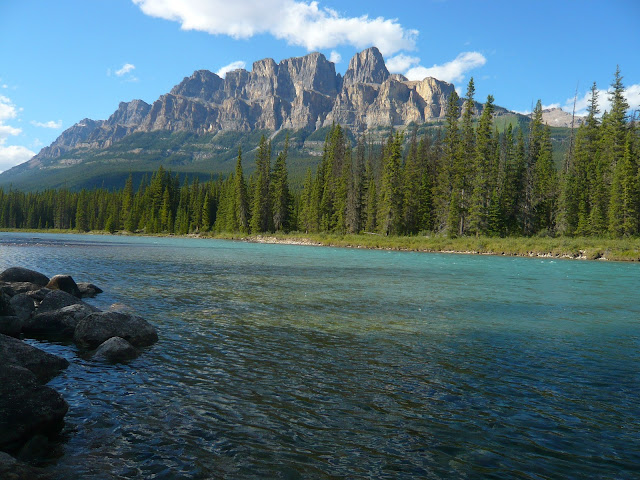
drove into Canmore for our hotel (Grande Rockies Resort). It was a
very good deal for the money: a one bedroom suite with full kitchen
(granite counter tops!), two flat screen TVs and a shower which is
more complicated than Windows 7.
Chiranjeeb

No comments:
Post a Comment